
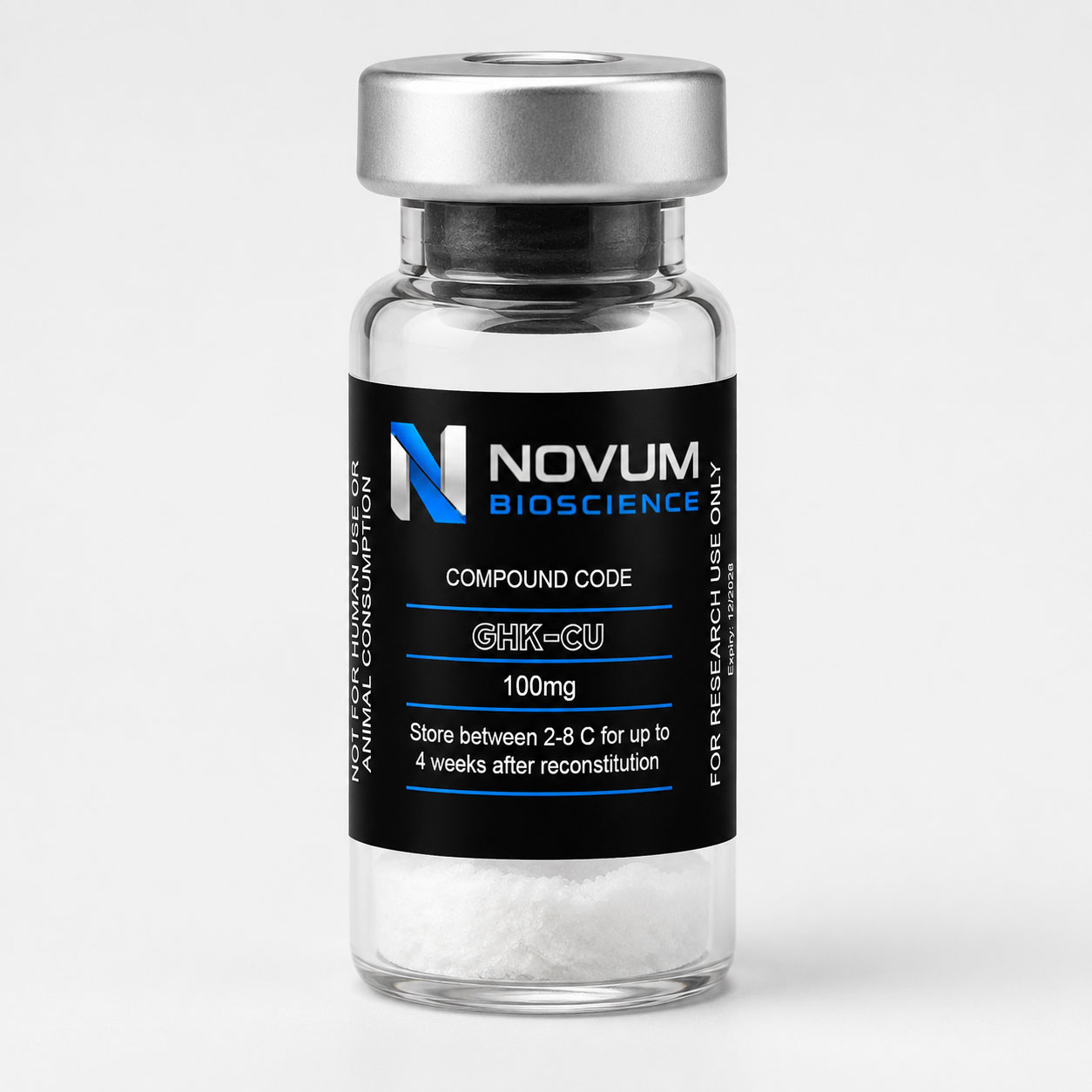
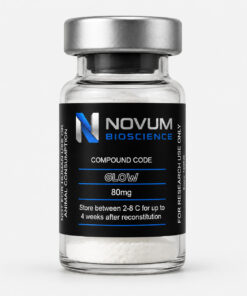
GHK-CU 100mg
$90.00
GHK-Cu 100mg at a Glance
- Compound: GHK-Cu
- Full name: Glycyl-L-histidyl-L-lysine copper complex
- Form: Copper-binding tripeptide
- Amount: 100mg
- Primary research areas: Skin biology, collagen, tissue remodeling, wound healing and cellular signalling
- Research profile: Copper-dependent peptide signalling and regenerative biology
- Intended purpose: In-vitro laboratory research
Buy GHK-Cu 100mg Online Canada.
Copper Peptide Research Compound | GHK-Cu 100mg
GHK-Cu 100mg is a copper-binding peptide formulation centered on glycyl-L-histidyl-L-lysine (GHK) complexed with copper. GHK-Cu has been extensively investigated in research involving collagen production, extracellular-matrix remodeling, tissue repair, wound-healing processes, skin biology, inflammation and cellular regeneration.
As a copper-peptide complex, GHK-Cu is particularly interesting to researchers studying how copper-dependent signaling interacts with cellular repair pathways. Research has investigated its effects on dermal fibroblasts, extracellular-matrix components, inflammatory signaling and tissue-remodeling processes.
This broad research profile is one reason GHK-Cu is frequently discussed in the context of regenerative and skin-focused peptide research.
GHK-Cu and Collagen Research
One of the most prominent areas of GHK-Cu research concerns collagen and extracellular-matrix biology.
Collagen is a major structural protein within connective tissue and skin. Its production and organization are closely connected to fibroblast activity and extracellular-matrix remodeling.
Experimental research has investigated GHK-Cu in relation to fibroblast signaling and processes involved in collagen synthesis and tissue remodeling.
This makes GHK-Cu particularly relevant to laboratory research examining how peptide signaling may influence skin structure, extracellular-matrix organization and tissue repair.
GHK-Cu and Skin Research
GHK-Cu has a substantial research history in skin biology and tissue remodeling.
Research has examined its relationship with processes including:
- Collagen synthesis
- Extracellular-matrix organization
- Skin-cell signaling
- Tissue remodeling
- Oxidative stress
- Inflammatory pathways
- Cellular repair
These mechanisms have made copper peptides a recurring subject in cosmetic-science and regenerative-biology research.
However, findings from laboratory or preclinical models should not automatically be interpreted as proof of a specific cosmetic or therapeutic outcome in humans.
GHK-Cu and Tissue Repair
Tissue repair requires coordinated activity involving cells, extracellular-matrix proteins, inflammatory signaling and tissue remodeling.
GHK-Cu is particularly interesting within this field because research has investigated its effects across several of these processes rather than focusing on a single biological pathway.
Studies have examined GHK-Cu in connection with fibroblast activity, collagen-related processes, matrix remodeling and wound-healing biology.
This makes GHK-Cu 100mg a useful research compound for experimental systems investigating the molecular mechanisms underlying tissue maintenance and repair.
GHK-Cu and Wound-Healing Research
Wound healing is a complex biological process involving inflammation, cell migration, extracellular-matrix deposition and subsequent tissue remodeling.
Research involving GHK-Cu has explored how copper-peptide signaling may interact with these processes.
Of particular interest are mechanisms involving:
Cell signaling → extracellular-matrix activity → collagen remodeling → tissue organization
This research profile helps explain why GHK-Cu is frequently investigated in studies involving skin repair and regenerative biology.
The evidence should nevertheless be interpreted according to the experimental model, concentration, exposure conditions and study design. Research findings do not establish that GHK-Cu produces a particular therapeutic outcome in humans.
GHK-Cu and Inflammatory Signaling
Inflammation is an essential component of tissue repair, but its regulation is also an important area of regenerative research.
GHK-Cu has been investigated in relation to inflammatory and oxidative-stress pathways, providing researchers with an opportunity to study how copper-peptide signaling may influence cellular responses associated with tissue injury and remodeling.
This makes inflammatory signaling another important component of the broader GHK-Cu research profile.
GHK-Cu and Cellular Remodeling
A defining feature of GHK-Cu research is its relationship with cellular and extracellular-matrix remodeling.
Rather than functioning as a single-pathway research compound, GHK-Cu has been investigated across several interconnected biological processes.
These include:
- Fibroblast signaling
- Collagen-related activity
- Extracellular-matrix remodeling
- Cell migration
- Tissue organization
- Oxidative-stress responses
- Inflammatory signaling
Researchers can therefore use GHK-Cu to investigate how copper-associated peptide signaling participates in complex tissue-maintenance systems.
GHK-Cu and Hair-Follicle Research
GHK-Cu has also been investigated in experimental research involving hair follicles and dermal papilla cells.
Research into copper peptides has examined signaling pathways involved in follicular biology and the hair-growth cycle.
This has generated interest in GHK-Cu as a research compound for studying the cellular mechanisms underlying hair-follicle activity and dermal-papilla signaling.
Evidence in this area should be distinguished from established treatments for human hair-loss conditions. GHK-Cu research does not by itself establish clinical efficacy for androgenetic alopecia or other forms of hair loss.
Be the first to review “GHK-CU 100mg”
Related products
HCG & Peptides
Reviews
There are no reviews yet.